


Erik was a jealous man who coveted his brother’s wife. He desired to possess her beauty, her charm, her intellect, even her very voice. His covetous nature was no secret to those who knew him well. His brother knew it. His brother’s wife knew it. For the sake of friendship, they both chose to downplay his duplicity and focus instead on his better qualities of which were few.
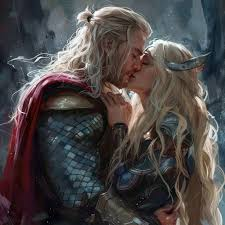
The one gift Erik did possess was that of storytelling. He could weave a tale of tragedy or humor on a whim. Indulging his ego, his stories often revolved around his own experiences leading others to delight in his own life’s happenings. When his brother Thorsten died, he told stories no more.
Thorsten’s final request of his brother was to build him a boat – a funeral pyre on which his body would be pushed out to sea and set alight by flaming arrows as was done for Viking warriors of old, for Thorsten was a Viking warrior of old.
The year was 1100AD. One hundred years had passed since the great Leif Erickson had discovered a new continent across the sea. Several explorers had since set out to repeat Leif’s journey there and back again. Though many departed, none returned. Those ships were thought to be forever lost at sea and the souls they carried gone to Niflheim – a land of primordial ice and cold where warriors wait, frozen in time for the chance to fight and earn their place at the great hall of the gods, Valhalla.
It was Thorsten’s heart which failed him. One beat too many or one beat too hard, no one could say. It was his wife who found him collapsed on the floor of their home. He was not quite gone, so she held him cradled in her arms until his last breath. It was a small comfort she gave him in those final moments. The memory of it would haunt her all her days. Still, she would not have had him pass any other way and gave offerings to Hel and Freya both for the ability to be present at the passing of her beloved.
For days she neither slept nor ate. She insisted on preparing the body herself and only requested that warm water and the appropriate herbs be brought. Rosemary, mugwart, hemp, and cloves – these were traditional, but she added in lavender as it was in season. She weaved the fragile flowers into his long, thick beard. Those who watched the preparation marveled at how graceful she looked. Some even thought the word “divine,” but dared not utter it aloud as not to arouse Freya’s jealousy and bring the wrath of a goddess upon the grieving widow.
When the day of the funeral arrived she emerged clad in black and veiled. She shed no tears at the service, for her eyes had run dry. She watched as Erik pushed the pyre out to sea, an honor that was reserved for the male next of kin. Thorsten’s fellow warriors let their arrows fly from the cliffs above. She winced as they landed, hitting their mark and setting the fire alight.
Long she stood there wondering, fearing, doubting, dreaming dreams of the life she had now lost forever. It was long after the fire had died and the sun had set before she returned to her house and retired for the night.
She did not emerge again until a week later. Friends and neighbors had brought her food which sat untouched at her door. It was presumed and rumored that she had nothing to eat nor drink in those days following the funeral. The only sign of life was consistent smoke coming from the chimney. As much as others wanted to provide her comfort, they new no amount of comfort could suffice. It was known and accepted in the entire community they had been soulmates – bound to one another by ties that surpass the separation of death. Hel herself could not part them forever.
On the day she stepped outside, no one had seemed to notice but for the food had been cleared away. A neighbor came to her door and knocked, but the knock went unanswered. She had already left for the day to gather berries and forage for mushrooms and other edibles in the woods.
If someone had noticed her, the first thing they would have seen is she had shorn her hair close to her head. She still wore the black funeral clothes and the veil covering her eyes and face. Her face would never be seen in public again. Someone started a rumor that she had wept over her lost love until her eyes had fallen out and cheeks sunken in. A once beautiful young maiden turned to a crone before her time by grief.
Some folk in the village even forgot her name. They took to calling her Angrboða, but never to her face – faceless as she appeared to be. Angrboða was not a jealous goddess like Freya. She is the one who brings grief. She is the one who offers sorrow to those in mourning. For without sorrow there can be no succor in grief.
Thorsten’s widow remarried quickly. Little choice was she given in the matter. It was a marriage of economic necessity as she and Thorsten had led humble lives. She had nothing to her name but the longhouse they had built together with their own hands. Blood, sweat, and tears went into the mortar – his blood, sweat, and tears, she thought with longing. It may be some time before she can share his grave deep beneath the earth, but at least the remains of their shared labor of love would remain above ground for as long as she needed its shelter.
The man she was forced to marry was known to be unkind and selfish. He beat his first wife to the point she was constantly covered in bruises. Some of the men would mutter amongst themselves that somebody ought to do something about it. However, nobody ever did until finally one day he had beaten her to death. That was never spoken of as the true cause though everyone knew it to be so. Instead they talked of how she had a poor constitution and must have been taken by an ill vapor.
So when Angrboða made her vows to her second husband, it was intentionally forgotten that she swear obedience to him. A member of the Volga passing through conducted the ceremony and was apprised of the unfortunate circumstances surrounding this union. All those in attendance agreed with the decision and nothing more was ever uttered on the matter.
Ríkarðr had made a reputation for himself and decided he must modify his behavior accordingly so as not to induce further ire from his friends and neighbours over his treatment of this second wife. For the first few weeks, he treated her with the utmost respect. However, this upstanding behavior quickly gave way to his truer nature and inborn cruelty.
It started with a slap across her face for a spilled drink. The next night he beat her for burning his supper. And on the third night he raped her with such brutality he’d left her permanently scarred, both body and soul. Fortunately, Angrboða had a much stronger constitution than his first wife and little tolerance for violence from her spouse. Thorsten had loved her well and she knew how a husband should treat a wife. She refused to settle for less.
The fourth night after he had beaten her and raped her, she killed him where he slept. He was not missed. He was not mourned. His body was left to lie out in the wilderness to feed the beasts and rot.
Angrboða inherited all her second husband’s wealth and it was such an endowment that she never had to marry again. This suited her as well as everyone else in the village. Reclusive as she was, Angrboða became known in the community as a skilled healer and medicine woman. There was no one she could not help regardless of age, ailment, or injury.
With time her hair grew back, long and full and light blond – much lighter than it had been before she’d been widowed. This coloring coupled with her healing skills. She became known as an incarnation of Eir the Healer. Such was her skill it was said she could even prevent disease through dreams.
Word of her abilities became known far and wide. That is what brought the Æsir down from Asgard to their humble village. It was a day long remembered and retold to the children and grandchildren of those who lived to see the day.
 Just One Take
Jacqueline
/ November 30, 2024I am so excited to share this story as it has been written in my mind over the past twenty years!